
TL;DR — Quick Summary
Physical therapy and chiropractic care are often the backbone of a physical therapy personal injury claim, because they show the injury needed ongoing treatment. In New York, no-fault pays first for reasonable and necessary therapy after a car crash, at fee-schedule rates. What hurts claims most is gaps in treatment, stopping early, or treatment that looks excessive. Expect an independent medical exam that can end no-fault benefits, and keep every visit documented.
For many accident injuries, such as neck and back strains, whiplash and disc problems, the main treatment is not surgery but weeks of therapy. That makes physical therapy personal injury records some of the most important evidence in a claim. Done well, therapy documents the injury and your recovery. Done badly, it gives the insurer reasons to cut the claim.
This guide explains who pays, what insurers look for, and how to make therapy count.
Physical Therapy vs Chiropractic Care
| Physical therapy | Chiropractic care | |
|---|---|---|
| Main focus | Strength, mobility and function through exercise and hands-on therapy | Spinal and joint adjustments, often for neck and back pain |
| Typical injuries | Sprains, strains, post-surgery recovery, disc injuries | Whiplash, back and neck strain |
| Who orders it | Often referred by a doctor | Patients can usually go directly |
| What insurers check | Progress notes and functional gains | Frequency of visits and measurable improvement |
Many patients see both. Insurers do not object to either type of care on its own; they focus on whether the treatment was reasonable, necessary and consistent.
Who Pays for Therapy After a New York Car Accident?
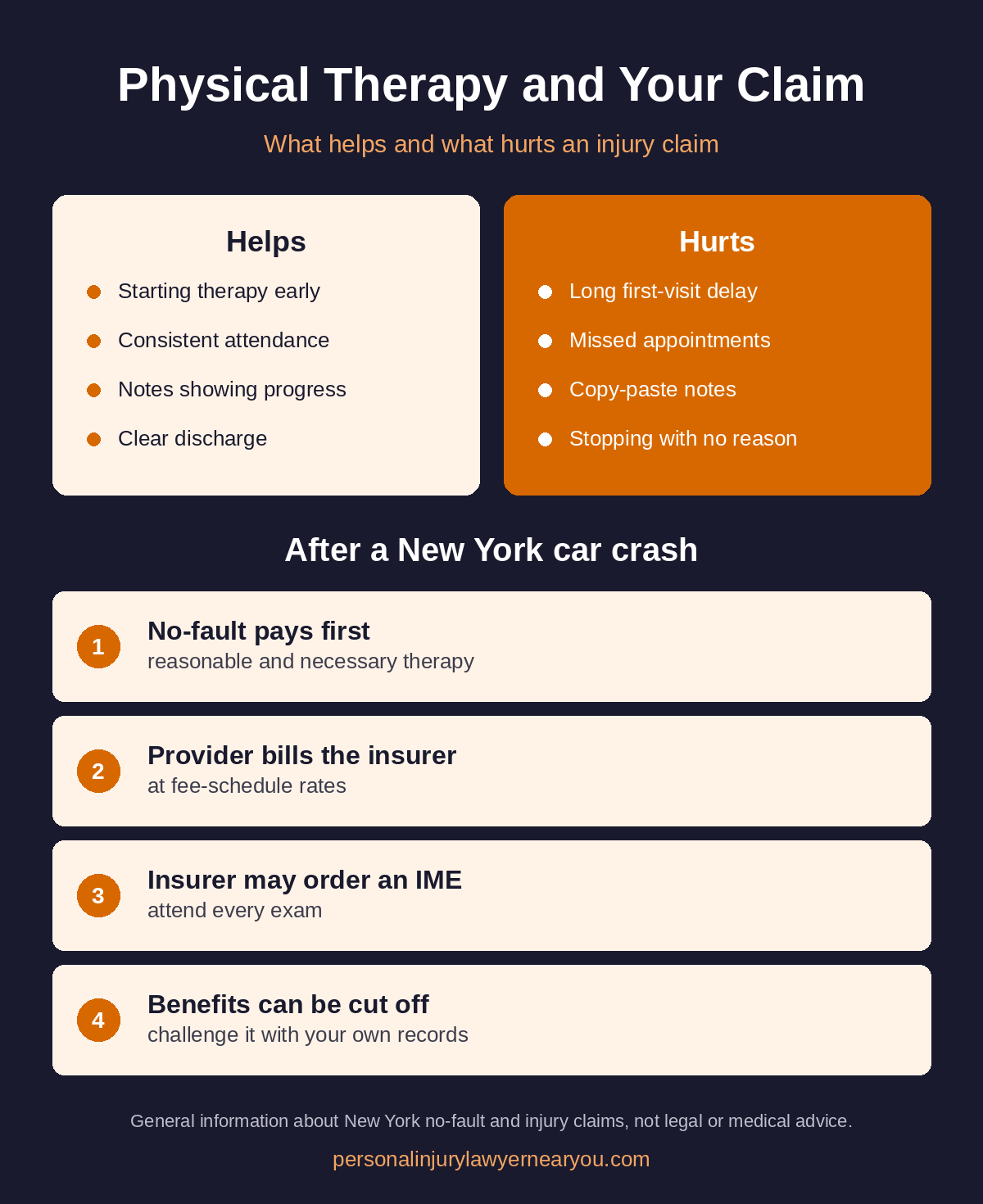
After a car crash, your own no-fault coverage pays first. It covers reasonable and necessary medical treatment, including physical therapy and chiropractic care, regardless of who caused the crash, up to the $50,000 basic limit. Providers usually bill the insurer directly, and payments are set by a fee schedule, so you should not be billed the difference. Our guide to New York no-fault insurance covers the 30-day application deadline, and our explainer on personal injury protection (PIP) insurance, the general term for no-fault coverage, explains how it works in New York and other states. The NY Department of Financial Services auto insurance resource center has more on no-fault rights.
For accidents that are not car crashes, such as a fall in a store, therapy is usually paid by health insurance first and then claimed as part of your damages.
How Therapy Records Affect Your Settlement
Therapy notes are a running record of your injury. Each visit usually records pain levels, range of motion, what you could not do and how you responded to treatment. Insurers and juries read these notes to judge how serious the injury was and how long it lasted.
| Helps your claim | Hurts your claim |
|---|---|
| Starting treatment soon after the accident | A long delay before the first visit |
| Consistent attendance | Missed appointments without a reason |
| Notes showing pain, limits and progress | Identical notes visit after visit |
| A clear discharge or a doctor’s reason to continue | Stopping with no explanation |
| Honest reporting of symptoms | Social media showing activity that contradicts the notes |
The IME That Can End Your Benefits
No-fault insurers can send you to an independent medical examination with a doctor they choose. If that doctor says further therapy is not necessary, the insurer may stop paying for it. You can challenge that decision, and your own provider’s notes are the main evidence. Attend every IME you are scheduled for, because missing one can itself lead to a denial.
Treatment Gaps and Stopping Early
A gap of several weeks between the accident and your first visit, or in the middle of a treatment plan, is one of the most common reasons insurers argue an injury was minor or caused by something else. If life gets in the way, such as work, childcare or a lost insurance card, tell your provider so the reason is written in your records.
Stopping early can be just as costly. If you stop because you feel better, that is fine and should be recorded. If you stop because of cost or time but still have pain, say so.
Can Too Much Therapy Hurt a Claim?
Yes. Insurers look for treatment that seems to continue without improvement or follows the same pattern for every patient. They watch for exaggerated claims, which we explain in our guide to how insurers use surveillance to catch them. Follow your provider’s plan, report changes honestly, and make sure the notes show progress or the reason for continuing.
Therapy and the Value of Your Claim
Therapy costs are part of your medical damages, and a long course of documented therapy also supports pain and suffering. In New York car cases, therapy records also help show whether the injury meets the serious injury threshold. See the full list of damages you can recover in New York. If you were hurt in Brooklyn, a Brooklyn car accident lawyer can check that your therapy records support the claim.
Frequently Asked Questions
Does physical therapy increase a personal injury settlement?
Documented physical therapy can increase a settlement because it adds medical costs and shows the injury needed ongoing care. Its value depends on consistent attendance, notes that show limits and progress, and treatment that is reasonable for the injury.
Does no-fault insurance pay for a chiropractor after a car accident in New York?
Yes. New York no-fault covers reasonable and necessary chiropractic and physical therapy treatment after a car crash, regardless of fault, up to the basic limit. Providers usually bill the insurer directly at fee-schedule rates.
What happens if I miss physical therapy appointments?
Missed appointments and gaps in treatment are often used to argue that your injury was minor or caused by something else. If you must miss sessions, tell your provider the reason so it is recorded.
Can an insurance company stop paying for my physical therapy?
Yes. A no-fault insurer can send you to an independent medical examination, and if its doctor says more therapy is not necessary, it may stop paying. You can challenge that decision with your own provider’s records.
How long should physical therapy last after an accident?
As long as your provider says it is medically necessary. Insurers look for progress over time, so notes should show either improvement or a clear reason to continue.
Should I see a chiropractor or a physical therapist after an accident?
Either can be appropriate, and many people see both. The most important thing is to get checked by a doctor promptly, follow a consistent treatment plan and keep records of every visit.
Key Takeaways
✅ Therapy records are a running record of your injury
✅ In New York, no-fault pays for reasonable therapy after a car crash
✅ Gaps and unexplained stops are the biggest risks
✅ Attend every IME; it can end no-fault benefits
✅ Make sure the notes show limits, progress and the reason to continue
In Therapy After an Accident?
Your treatment records may be the strongest evidence in your claim. A free case review checks that they support the injury and explains what the claim may be worth.
Still in Therapy After an Accident? Get a Free Review
Free case review. No win, no fee. No upfront cost.
Want more NYC injury guides and legal news from PILNY in your Google results?
