
Staten Island Slip and Fall Accident Lawyer — A Property Owner's Neglect Shouldn't Become Your Debt.
A serious fall can happen anywhere on Staten Island — an icy suburban sidewalk in Great Kills, a wet floor at the Staten Island Mall, a broken step in an aging St. George apartment building, or a cracked walkway near the St. George Ferry Terminal. Property owners and their insurers know exactly how to protect themselves: they’ll argue you weren’t watching, that the hazard was “open and obvious,” or that they never knew about it. We connect injured Staten Islanders with a Staten Island slip and fall injury lawyer who proves the owner’s negligence and fights for the full value of your claim.
Free Consultation - No Obligation
Response within 2 hours.
Why Falls on Staten Island Are Easy to Blame on the Victim
Unlike a car crash, a slip and fall has no no-fault coverage to pay your early bills — recovery depends entirely on proving that a property owner was negligent. That’s a higher bar than a Staten Island car accident lawyer faces with automatic PIP benefits, and owners’ insurers exploit it. Staten Island’s mix of older housing stock, sprawling retail centers, long stretches of suburban sidewalk, and harsh winter weather creates constant hazards, but the burden falls on you to show the owner knew or should have known about the danger and failed to fix it. A premises liability attorney in Staten Island knows how to meet that burden before the evidence disappears.
Where Serious Staten Island Falls Happen
- Snow and ice on un-shoveled sidewalks and parking lots after winter storms
- Wet and freshly mopped floors without warning signs at the Staten Island Mall and local supermarkets
- Broken stairs, loose railings, and poor lighting in St. George and Stapleton apartment buildings
- Cracked, uneven, and heaved sidewalks along Hylan Boulevard and Forest Avenue
- Potholes and debris in retail and restaurant parking lots in New Springville and Charleston
- Wet or damaged flooring at the St. George Ferry Terminal and unsafe construction and renovation sites
Explore Our Staten Island Personal Injury Practice Areas
Whether you fell at the Staten Island Mall, on an icy Great Kills sidewalk, or in a St. George apartment stairwell, the right Staten Island premises liability attorney changes everything. PILNY connects Staten Island accident victims with qualified lawyers across every major injury case type, with no fees and no pressure.
What You Have to Prove — and How Owners Fight It
To win a Staten Island slip and fall case, you generally must show the property owner created the hazard, knew about it (actual notice), or that it existed long enough that they should have known (constructive notice) — and failed to fix it in a reasonable time. Owners fight back by cleaning up the scene, “losing” incident reports, and claiming the danger was obvious. Photos, incident reports, maintenance logs, and surveillance footage are how it’s proven — which is why acting fast, with a Staten Island personal injury lawyer preserving the record, makes or breaks your case.


The "Notice" Problem
To win, you usually have to show the owner knew about the hazard (actual notice) or that it existed long enough that they should have known (constructive notice). Timestamped photos, incident reports, maintenance logs, and surveillance footage make or break this — and they vanish fast.
Staten Island Winter Sidewalks
New York City law makes most Staten Island property owners responsible for clearing snow and ice from their abutting sidewalks within set hours after a storm. When they don't, and you fall, that failure can be the heart of your claim.
Who Is Actually Responsible
Sidewalk liability, building common areas, leased storefronts, and City or public property all follow different rules. Identifying the right responsible party — and the deadline that applies to them — is exactly where an experienced Staten Island lawyer matters.
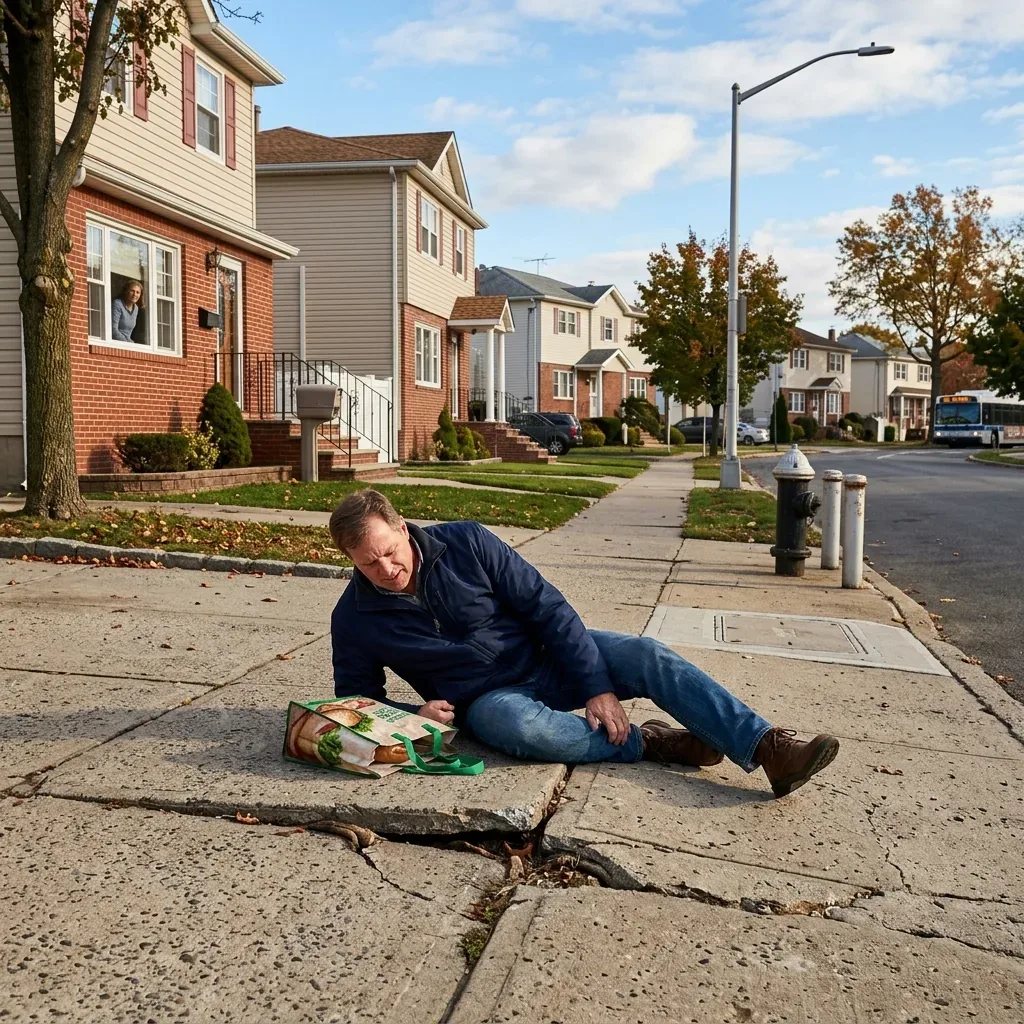
Who's Responsible When You Fall on a Staten Island Sidewalk
In New York City, the owner of the property next to a sidewalk is generally responsible for keeping it safe and clearing snow and ice under NYC Administrative Code § 7-210 — with limited exceptions for small owner-occupied homes. If you fell on City or public property — a park, a government building, or a transit facility — different rules and much shorter deadlines apply. Sorting out who’s liable is often the hardest part of a premises case — the same tangle a Manhattan slip and fall injury lawyer untangles across the harbor — and getting it wrong can cost you the claim.
Common Causes of Staten Island Slip and Fall Injuries
Understanding what caused your fall is the foundation of your claim. On Staten Island, these injuries come from neglected floors, sidewalks, stairs, and parking lots — the same hazards a Bronx slip and fall injury lawyer sees across the harbor.
Common causes include:
- Wet or recently mopped floors with no warning signs
- Snow and ice left uncleared beyond the legal time limit
- Cracked, broken, or uneven sidewalks and walkways
- Defective, poorly lit, or handrail-less staircases
- Spills, leaks, and debris left in store aisles and lobbies
- Loose rugs, mats, and torn or bunched carpeting
- Hidden level changes and unmarked steps
Whatever caused your fall, the owner’s insurer is already shaping their version of it. You need to shape yours.
The Injuries a Bad Fall Leaves Behind
Falls are deceptively serious, especially for older Staten Islanders:
- Hip fractures and broken wrists from breaking a fall
- Traumatic brain injuries and concussions from head strikes
- Spinal cord injuries and herniated discs
- Torn ligaments, knee and shoulder damage
- Facial injuries and dental damage
- Chronic pain and reduced mobility that lingers for years
The bills add up fast, and the average personal injury settlement amounts in New York show why recovering full value — medical care, lost income, and pain and suffering — takes a lawyer who won’t accept a quick payout. Our guide on what your accident case is worth in Staten Island shows how that value is calculated.

The First 48 Hours After a Staten Island Fall
How you respond right after a fall shapes your entire claim. The same first-hours discipline in our guide on what to do after a car accident in New York applies to a fall, too:
- Report the fall to the property owner, manager, or store and ask for a written incident report
- Photograph the exact hazard before it’s cleaned or repaired — this is critical
- Get medical care the same day, even if you feel “just sore”
- Get names and numbers of any witnesses
- Keep the shoes and clothing you were wearing
- Don’t give a recorded statement or accept blame
- Call a Staten Island slip and fall injury lawyer before the scene changes

Comparative Fault — You Can Still Recover
Owners’ insurers love to argue you “weren’t paying attention.” But New York’s comparative fault rule means you can recover even if you were partly careless; your compensation is reduced by your percentage of fault, not eliminated. Solid documentation and early legal guidance decide how that fault gets divided — and if you’re unsure whether it’s worth pursuing, our guide on should I get a lawyer for a car accident or fall walks through when to call.
What Your Staten Island Slip and Fall Claim Can Recover
Depending on your injuries, your claim can cover:
- Emergency care, surgery, and ongoing medical treatment
- Lost wages and reduced future earning capacity
- Pain and suffering, physical and emotional
- Long-term rehabilitation, home care, and mobility equipment
- Future medical costs
Most victims badly underestimate what a serious fall is worth. Before you accept a number, our free personal injury settlement calculator shows what your case may be worth.
Don't Miss Your Filing Deadline
You generally have three years from the date of the fall to file a personal injury lawsuit in New York. But if you fell on City, MTA, or public property, you may have only 90 days to file a formal notice of claim — miss it, and your right to recover can be gone. A personal injury lawyer in Staten Island can flag which deadline applies before it’s too late, so it’s critical to talk to a lawyer quickly.
Injury Claims Across New York
This page focuses on Staten Island, but slip and fall claims across New York share the same legal framework — the same notice-and-negligence standard a Queens slip and fall injury lawyer proves borough-wide. Whether your fall happened in another borough or a nearby county, your rights and options don’t change.
We connect accident victims with experienced attorneys across all five boroughs and beyond — with the same no-fee, no-obligation process.
Frequently Asked Questions
Usually that the property owner created the hazard, knew about it, or that it existed long enough that they should have known — and failed to fix it in a reasonable time. Photos, incident reports, maintenance logs, and footage prove it, which is why acting fast matters.
In New York City, the owner of the adjacent property is generally responsible for keeping the sidewalk safe and clearing snow and ice, with limited exceptions for small owner-occupied homes. Falls on City or public property follow different rules and shorter deadlines.
Yes. New York's comparative fault rule lets you recover even if you were partly careless; your compensation is reduced by your percentage of fault, not eliminated.
Nothing upfront. Lawyers in our network work on a contingency fee — you pay no fee unless they win, and the first consultation is free.
Generally three years from the date of the fall. But if you fell on City or public property, you may have only 90 days to file a notice of claim — so act quickly.
It depends on injury severity, medical costs, lost income, and long-term impact. Serious falls — hip fractures, head injuries, spinal damage — often carry more value than victims expect.
Talk to a Staten Island Slip and Fall Lawyer Today
Property owners and their insurers get stronger every day you wait, while your evidence disappears. We connect injured Staten Islanders with experienced premises liability attorneys — completely free, with zero obligation.
Call Now to Speak With a Legal Professional