
TL;DR — Quick Summary
Yes. Many large insurers use claim-valuation software that turns injury codes, treatment and other inputs into a suggested settlement range. The concern about algorithmic bias in personal injury claims is that these systems can undervalue injuries that are hard to code, such as chronic pain, and depend on how the insurer tunes them. In 2010, Allstate agreed to a $10 million multistate settlement over how it used its Colossus software. The practical answer for claimants: the software can only count what is documented, so complete medical records and a detailed demand are your best protection.
When an adjuster makes you an offer, it may not come only from their judgment. Many insurers use software to value injury claims, and concerns about algorithmic bias in personal injury claims have grown as artificial intelligence spreads through the insurance industry.
This guide explains how these systems work, what the concerns are, and what you can do so your claim is valued fairly.
How Claim-Valuation Software Works
Adjusters enter details about the claim, such as diagnosis codes, the treatment received, how long it lasted, imaging results, time off work and the injured person’s location. The software compares the claim to historical data and suggests a range for general damages, which the adjuster uses as the starting point for negotiation.
| Input | How it is used |
|---|---|
| Diagnosis codes | Each injury type carries a value range |
| Treatment type and length | Surgery, injections and long therapy usually raise the range |
| Imaging findings | Objective findings support higher values |
| Gaps in treatment | Often lower the suggested value |
| Lost work | Adds economic loss |
| Location | May reflect local verdict and settlement history |
A Known Example: Colossus
The best-known system is Colossus, used for bodily injury claims by several insurers. In 2010, Allstate agreed to a $10 million multistate settlement after regulators in 45 states reviewed how it used the software, as Digital Insurance reported. The review raised concerns about inconsistent use across regions, though it found no systemic underpayment. Our guide to Allstate and GEICO personal injury settlements covers how large insurers handle claims more broadly.
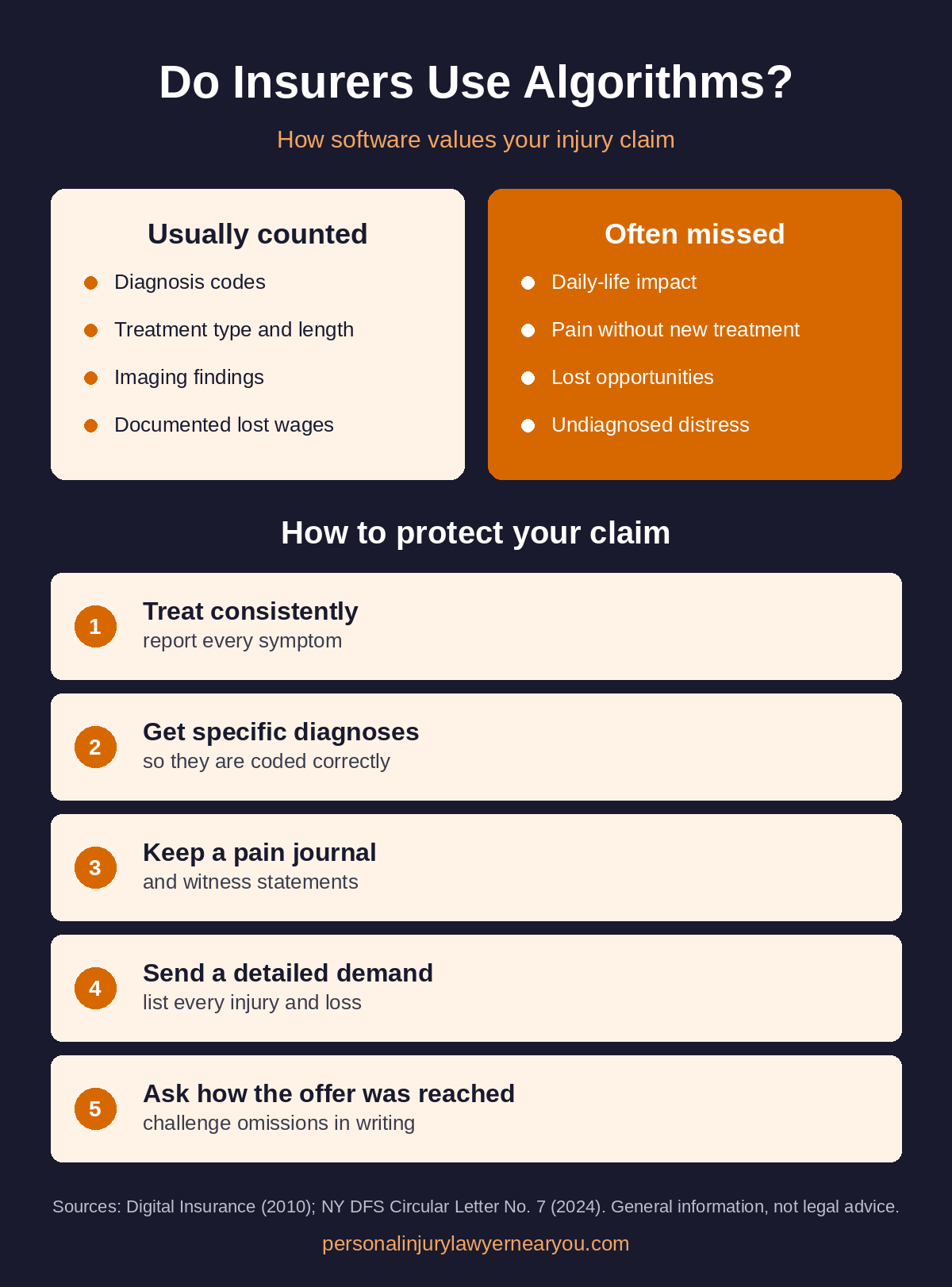
Concerns About Algorithmic Bias
- Hard-to-code injuries. Chronic pain, soft-tissue injuries and psychological harm may not fit neatly into codes and can be undervalued.
- Missing information. Anything not entered, such as how the injury affects your job or family life, may not count.
- Calibration. How the insurer configures and updates the system affects every number it produces.
- Location and history data. Systems that rely on past outcomes can carry past patterns forward.
- Transparency. Claimants rarely see how the number was built.
Regulators are paying attention. New York’s Department of Financial Services issued Insurance Circular Letter No. 7 (2024) on insurers’ use of artificial intelligence and external consumer data, focused on underwriting and pricing. It signals closer scrutiny of how insurers use automated systems.
What Software Can and Cannot Count
| Usually counted | Often missed |
|---|---|
| Diagnoses and procedure codes | How the injury changed your daily life |
| Number and type of treatments | Pain that persists without new treatment |
| Documented lost wages | Lost opportunities, such as a promotion |
| Objective imaging | Psychological effects not formally diagnosed |
How to Protect Your Claim
- Treat consistently and tell every provider about every symptom, so it appears in the records.
- Make sure diagnoses are specific. A clear diagnosis is more likely to be coded correctly than vague notes.
- Document daily-life effects in a pain journal and through statements from family and coworkers.
- Send a detailed demand letter that lists every injury, treatment and loss, so nothing is missed in data entry.
- Ask how the offer was reached. If it ignores documented injuries, say so in writing.
For the full picture of what goes into a claim’s value, see our guide to damages in a New York personal injury claim, and use the personal injury settlement calculator as a rough check on an offer. Gaps and inconsistencies matter as much to software as to people; our guide to how insurers spot exaggerated claims explains what they look for.
The Human Factor Still Matters
Software suggests a range; people still negotiate the settlement. A well-documented claim, a clear demand and a credible threat of a lawsuit all move offers beyond what a system first suggests. That is part of why mediation and litigation often produce higher numbers than early offers. If you were hurt in Queens and think an offer missed part of your injury, a Queens personal injury lawyer can review it for free.
Frequently Asked Questions
Do insurance companies use algorithms to value injury claims?
Many large insurers use claim-valuation software that turns details such as diagnoses, treatment and lost work into a suggested settlement range. Adjusters then use that range as a starting point for negotiation.
What is Colossus insurance software?
Colossus is a well-known claim-valuation system used for bodily injury claims. In 2010, Allstate agreed to a $10 million multistate settlement after regulators reviewed how it used Colossus, although the review found no systemic underpayment.
What is algorithmic bias in personal injury claims?
It is the concern that claim software can undervalue certain injuries or claimants, for example injuries that are hard to code such as chronic pain, or patterns carried over from historical data and how the system is configured.
How can I make sure software values my claim fairly?
Treat consistently, make sure every symptom and diagnosis is in your medical records, document how the injury affects daily life, and send a detailed demand letter listing every injury and loss.
Are there rules about insurers using AI in New York?
New York’s Department of Financial Services issued Circular Letter No. 7 (2024) on insurers’ use of artificial intelligence and external consumer data, focused on underwriting and pricing.
Can I negotiate above what the software suggests?
Yes. Software suggests a range, but people negotiate the settlement. Strong documentation, a clear demand and the possibility of a lawsuit can move an offer beyond the first number.
Key Takeaways
✅ Many insurers use software to suggest a settlement range
✅ Allstate settled a multistate review of its Colossus use in 2010
✅ Hard-to-code injuries risk being undervalued
✅ Software counts only what is documented
✅ Detailed records and a clear demand are your best protection
Think a Computer Undervalued Your Claim?
An offer built from incomplete data is an offer you can challenge. A free case review checks whether your records capture the full injury and whether the number on the table reflects it.
Low Offer? Find Out What Your Claim Is Really Worth
Free case review. No win, no fee. No upfront cost.
Want more NYC injury guides and legal news from PILNY in your Google results?
