
TL;DR — Quick Summary
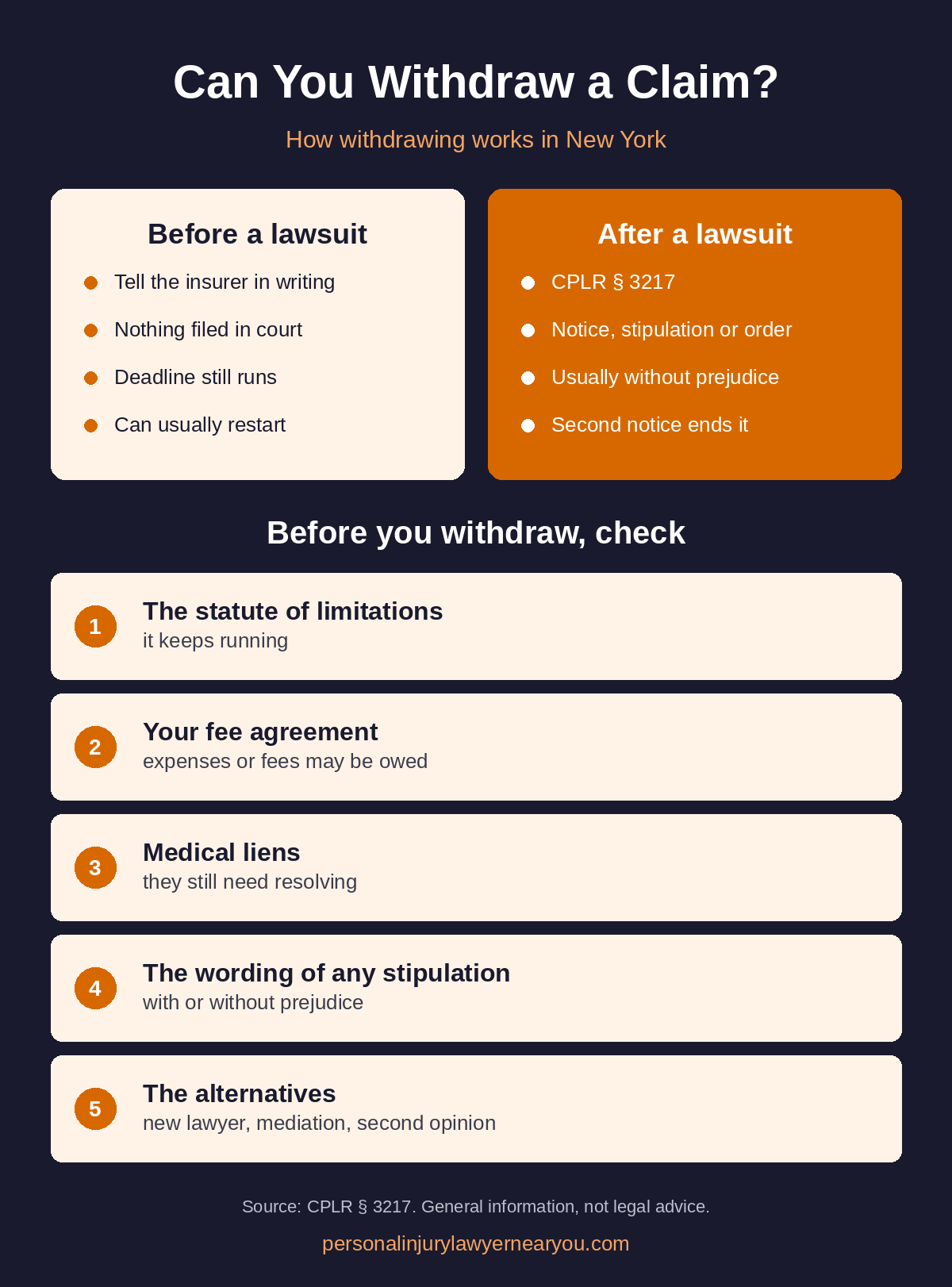
Yes. Before a lawsuit, you can simply tell the insurer in writing that you are withdrawing. After a lawsuit is filed in New York, you discontinue it under CPLR § 3217, by notice early on, by a stipulation signed by all parties, or by court order. A first discontinuance is usually without prejudice, but the deadline keeps running, a second discontinuance by notice can end the claim for good, and you may still owe case expenses or a lawyer’s fee. Unpaid medical bills stay your responsibility, although health insurer and Medicaid liens are normally repaid only out of a recovery.
Can you withdraw a personal injury claim? Yes. It is your claim, and you can generally stop pursuing it whenever you choose. People withdraw for many reasons: the stress of the process, a relationship with the other party, a fear of costs, or a recovery that made the claim feel unnecessary.
Before you do, it helps to understand how withdrawing works, what it can cost, and whether you could bring the claim back later.
Withdrawing Before vs After a Lawsuit
| Stage | How to withdraw | Key risk |
|---|---|---|
| Before a lawsuit | Tell the insurer in writing you are no longer pursuing the claim | Low; the deadline still runs if you change your mind |
| Lawsuit filed, early stage | Serve and file a notice of discontinuance | The deadline keeps running |
| Lawsuit underway | Stipulation signed by all parties, or a court order | Conditions or costs may be attached |
| Settled and release signed | Generally cannot withdraw | A signed release usually ends the claim permanently |
How Discontinuance Works in New York
Once a lawsuit is filed, New York’s CPLR § 3217 sets out three main routes:
- Notice of discontinuance. Available early: before the defendant serves an answer, or within 20 days after the complaint is served, whichever comes first. You serve the notice on all parties and file it with the court.
- Stipulation. A written agreement signed by the attorneys for all parties, filed before the case is submitted to the court or jury. It is not available in this simple form if one of the parties is a child.
- Court order. In other situations, a judge must approve the discontinuance and may set conditions, such as paying costs.
Can You Refile Later?
A discontinuance is usually without prejudice, which means the claim can generally be brought again. But there are two big catches:
- The deadline does not stop. The statute of limitations keeps running after you withdraw. If it passes, refiling is no longer possible. See how long you have to file a personal injury claim in New York.
- A second notice ends it. If you have already discontinued the same claim once, a second discontinuance by notice counts as a final decision on the merits, and the claim cannot be refiled.
A stipulation or court order can also say the discontinuance is with prejudice, which ends the claim permanently. Read the paperwork carefully before you sign.
What Withdrawing Can Still Cost You
| Cost | What to expect |
|---|---|
| Your lawyer’s fee | Contingency agreements often say no fee if nothing is recovered, but check whether the lawyer can claim a fee or expenses if you withdraw against advice |
| Case expenses | Court fees, records and expert costs already paid may be owed under your agreement |
| Medical bills | Unpaid doctor and hospital bills are still yours to pay; health insurer and Medicaid liens are normally repaid only out of a recovery |
| Court costs | A judge may attach costs as a condition of discontinuance |
Fee terms vary, so read your agreement. Our guide to how a contingency fee works explains the usual structure, and personal injury lawyer fees in New York covers expenses.
Alternatives Worth Considering First
- Change lawyers. If the problem is communication or trust, you can switch without dropping the claim. See whether you can fire or switch your personal injury lawyer.
- Try mediation. A neutral mediator can bring a stalled case to a fair end without trial. Our guide explains how personal injury mediation works.
- Pause and get advice. If the stress is about trial, remember most cases settle long before that stage.
If you were hurt in the Bronx and are unsure whether to continue, a Bronx personal injury lawyer can give you a free second opinion.
Frequently Asked Questions
Can you withdraw a personal injury claim?
Yes. Before a lawsuit, you can tell the insurer in writing that you are no longer pursuing the claim. After a lawsuit is filed in New York, you discontinue it by notice, by a stipulation signed by all parties, or by court order under CPLR § 3217.
Can I refile a personal injury claim after withdrawing it?
Often yes, because a first discontinuance is usually without prejudice. But the statute of limitations keeps running, and a second discontinuance by notice of the same claim counts as a final decision, so refiling may not be possible.
Do I owe my lawyer if I withdraw my case?
It depends on your fee agreement. Many contingency agreements charge no fee if nothing is recovered, but you may owe case expenses, and some agreements allow the lawyer to claim a fee or costs if you withdraw against advice.
What happens to my medical bills if I drop my claim?
Unpaid bills from your doctors and hospitals do not go away; you still owe them. Liens from a health insurer or Medicaid work differently: they are normally repaid only out of a settlement or award, so if there is no recovery there is usually nothing for them to be repaid from.
Can I withdraw after accepting a settlement?
Usually not. Once you sign a release, the claim is generally over for good. That is why it is important to be sure before signing.
What are the alternatives to withdrawing a claim?
You can switch lawyers, pause negotiations, ask for mediation, or simply get a second opinion on the case. If the issue is the lawyer rather than the claim, changing representation is often the better choice.
Key Takeaways
✅ You can withdraw a personal injury claim at almost any stage
✅ In New York, lawsuits are discontinued under CPLR § 3217
✅ The statute of limitations keeps running after you withdraw
✅ A second discontinuance by notice can end the claim permanently
✅ Fees, expenses and unpaid medical bills may still apply
Thinking About Dropping Your Claim?
Withdrawing is your right, but it is not always the only option. A free case review gives you an honest second opinion on the claim, the costs of stopping, and whether a different approach would serve you better.
Unsure About Your Case? Get a Free Second Opinion
Free case review. No win, no fee. No upfront cost.
Want more NYC injury guides and legal news from PILNY in your Google results?
