
TL;DR — Quick Summary
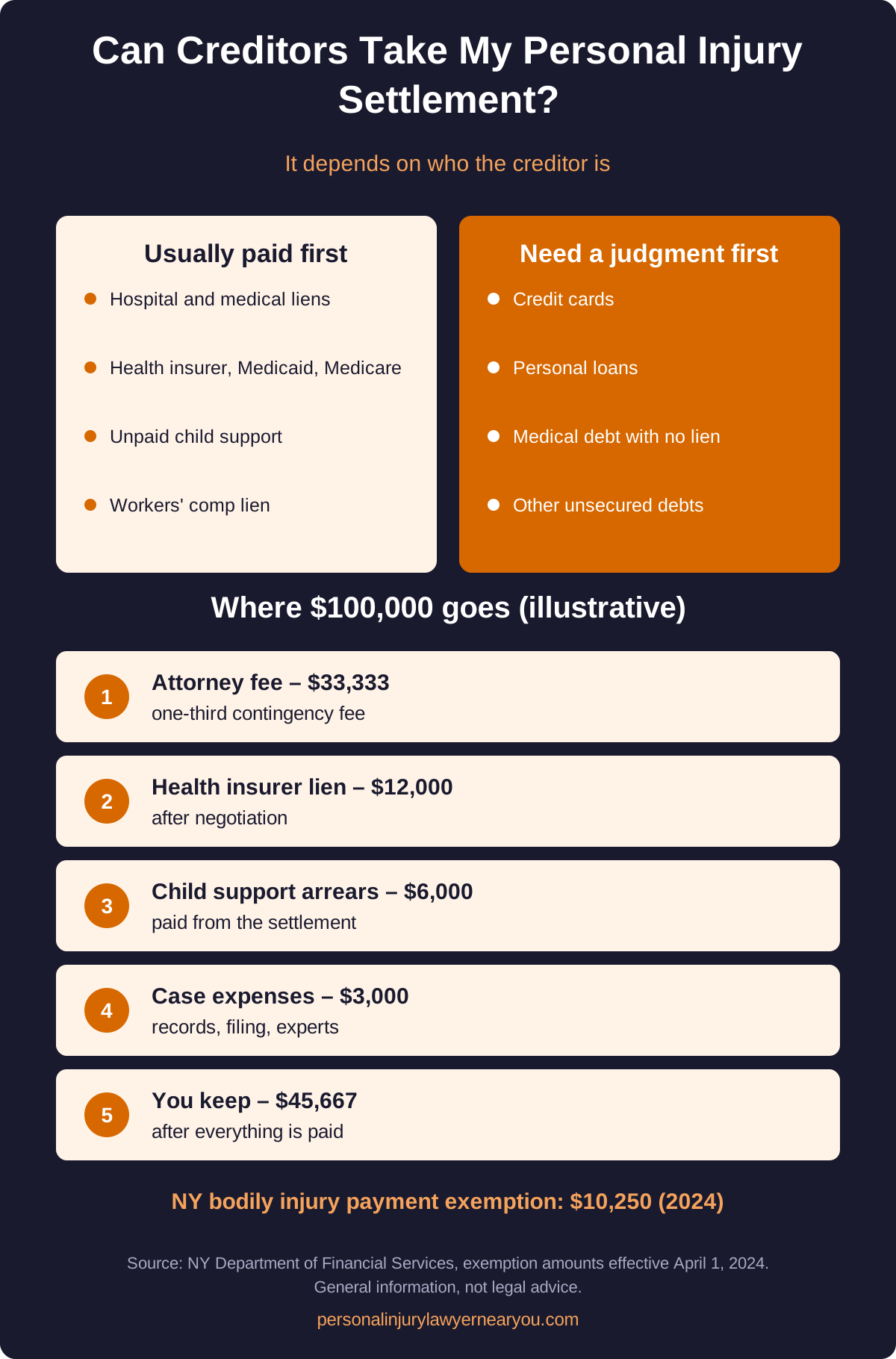
It depends on who the creditor is. Lienholders, such as hospitals, health insurers, Medicaid, Medicare and unpaid child support, are usually paid out of the settlement before you get your check. Ordinary creditors, like credit cards and personal loans, generally need a court judgment first, and New York protects part of a bodily injury payment from them. In bankruptcy, a settlement must be disclosed and only the exempt part is safe. Planning before the money arrives is the best protection.
Can creditors take my personal injury settlement? It’s one of the first worries people have once a case starts moving, especially after months of missed work and unpaid bills. The honest answer is that some people can be paid from your settlement and others usually can’t, at least not without extra steps.
This guide sorts creditors into the groups that matter, explains what New York protects, covers child support, medical liens and bankruptcy, and ends with practical ways to keep as much of the money as possible. It is general information, not legal advice for your situation.
Can Creditors Take My Personal Injury Settlement? It Depends on Who They Are
| Type of creditor | Can they reach the settlement? | How |
|---|---|---|
| Hospitals and doctors with liens | Yes, usually | Paid from the settlement before you receive it |
| Health insurer, Medicaid, Medicare | Yes, for injury-related care | Reimbursement or lien rights by law or contract |
| Workers’ comp carrier | Yes, if it paid benefits | Statutory lien on a third-party recovery |
| Unpaid child support | Yes, often | Liens and settlement intercepts |
| Credit cards, personal loans | Not directly | Need a court judgment, then a bank levy |
| IRS (unpaid taxes) | Possibly | Federal tax lien or levy |
| Bankruptcy trustee | The non-exempt part | Settlement is part of the bankruptcy estate |
The key split is between creditors who have a lien on the case itself and creditors who are just owed money in general. Lienholders get paid before you do. General creditors have to chase you after the money is yours.
Medical Liens and Reimbursement Come First
If someone paid for your injury-related treatment, they usually have a right to be paid back from the settlement. That includes:
- Hospitals that file a lien under New York’s lien law after treating an accident victim.
- Health insurers under the reimbursement terms of many plans, particularly employer self-funded plans.
- Medicaid, which can recover from the part of a settlement that represents past medical expenses.
- Medicare, which must be repaid for conditional payments it made for your accident care.
- Workers’ compensation, if you were hurt on the job and also have a case against an outside party, as in the lien example in our guide for an injured truck driver in Brooklyn.
After a New York car crash, no-fault insurance pays the first $50,000 of medical bills and lost wages regardless of fault, and no-fault benefits generally aren’t repaid from your injury settlement. That often keeps the lien picture simpler for car accident victims than for people hurt in falls or other accidents.
These are not optional, and ignoring them can create personal liability. The good news is they are often negotiable. Lawyers routinely ask lienholders to reduce their claims to reflect legal fees and how much of the case value went to medical costs. What’s left after fees, expenses and liens is your net recovery, which is why our guide to average personal injury settlement amounts always distinguishes gross from net.
Can Child Support Be Taken From a Personal Injury Settlement?
Yes. Unpaid child support is one of the most common claims against a settlement. Support enforcement agencies can place liens and use settlement intercept programs, and many insurers check claimants against child support databases before paying. If you owe arrears, expect them to be paid from the settlement.
If you are behind on support, tell your lawyer early. It is far better to plan for it than to have funds frozen at the last minute.
General Creditors: Judgments, Bank Levies and Garnishment
A credit card company or personal lender has no automatic right to your settlement. To collect, it generally has to sue you, win a judgment and then use enforcement tools. Once settlement money lands in your bank account, a judgment creditor can serve a restraining notice and try to levy the account.
Can a personal injury settlement be garnished? Technically, garnishment usually refers to wages. A lump-sum settlement isn’t a paycheck, but it can still be reached through a bank levy once it is deposited, subject to exemptions.
What New York protects
New York law exempts certain property from money judgments. According to the New York Department of Financial Services exemption amounts, the figures adjusted in April 2024 include a $3,425 basic exemption for bank accounts in many cases and a $10,250 exemption under Debtor and Creditor Law 282(3)(iii), the provision for payments on account of personal bodily injury. That bodily injury exemption does not cover the pain and suffering or actual pecuniary loss portions of a settlement, and amounts are updated every three years.
Exemptions are not automatic. If an account is restrained, you usually have to claim the exemption on time, which is one more reason to involve a lawyer before the money arrives.
Personal Injury Settlements in Bankruptcy: Chapter 7 vs Chapter 13
If you file for bankruptcy, or are thinking about it, your injury claim matters even before it settles. A pending claim is an asset of the bankruptcy estate and must be listed in your paperwork. Failing to disclose it can cost you the claim entirely.
| Chapter 7 | Chapter 13 | |
|---|---|---|
| What happens to the claim | The trustee controls it; exempt part is yours, the rest pays creditors | You keep the claim; it can change your repayment plan |
| Exemptions | New York or federal exemption set, depending on your election | Same exemptions affect what creditors must receive |
| Timing risk | Settlement received during the case is estate property | A settlement during the plan may need to be reported |
| Biggest mistake | Not listing the claim | Not telling the trustee about a new settlement |
Bankruptcy rules interact with your injury case in technical ways, including whether a claim that arises after filing belongs to the estate. Talk to a bankruptcy attorney and make sure your injury lawyer and bankruptcy lawyer are in contact.
Taxes and the IRS
Most physical injury compensation is not taxable income, so the IRS normally has no claim on it as income. But if you owe back taxes, a federal tax lien can attach to your property, including settlement money once it is yours. For tax debts, a tax professional is the right call.
How Much of the Settlement Do You Actually Keep?
An illustrative example with made-up numbers shows why planning matters:
| Item | Amount |
|---|---|
| Gross settlement | $100,000 |
| Attorney fee (one-third) | – $33,333 |
| Case expenses | – $3,000 |
| Health insurer lien (after negotiation) | – $12,000 |
| Child support arrears | – $6,000 |
| Net to you | $45,667 |
Those deductions are why the number in the newspaper is rarely the number in your account. Fee structures are explained in our breakdown of personal injury lawyer fees in New York.
Can Creditors Take My Personal Injury Settlement Before I Get It? A Protection Checklist
You can’t make legitimate debts disappear, but you can avoid losing more than you have to. These steps help.
1. List every debt and lien at the start
Tell your lawyer about medical bills, health insurance, Medicaid or Medicare, workers’ compensation, child support, judgments and any bankruptcy. Surprises at the closing table are what delay payment and shrink your share.
2. Let your lawyer negotiate liens
Lien reductions are routine. A lienholder that paid $20,000 may accept less once fees and the overall case value are taken into account. Every dollar saved goes to you.
3. Keep the money separate
Depositing injury money into a separate account makes it easier to show which funds came from the settlement if you ever need to claim an exemption.
4. Act fast if an account is frozen
Restraining notices come with short deadlines to claim exemptions. Don’t wait to see what happens; contact a lawyer the same week.
5. Never hide a claim or settlement
Concealing money from a bankruptcy court, a support agency or a creditor with a judgment can turn a manageable debt into a fraud problem. Disclosure is always the safer route.
6. Get the closing statement in writing
Before you sign the release, ask for a written breakdown showing the gross settlement, the fee, each expense and each lien. Check every line. If a lien amount looks too high, ask whether it has been negotiated and whether the lienholder has confirmed the final figure in writing.
7. Consider a structured settlement for larger cases
For serious injuries, paying part of the settlement over time can help with budgeting and long-term care. It doesn’t erase existing debts, but it can make the money last.
If you already have a judgment against you, mention it on day one. Your lawyer can plan where the money is paid and which exemptions to claim before any account is touched.
So, can creditors take my personal injury settlement? Lienholders and child support usually can, ordinary creditors usually can’t without a judgment, and bankruptcy changes the picture. Planning with your lawyer before the check is written is what protects the most money.
Get Help Before the Settlement Arrives
If you’re worried about debts or liens, raise them at your first meeting. A good lawyer will build them into the settlement plan from the start, and if you are still deciding whether you even need one, see our guide on handling a personal injury claim without a lawyer for when that can work.
Frequently Asked Questions
Can creditors take my personal injury settlement?
Sometimes. Ordinary creditors usually need a court judgment first, and New York protects only part of a bodily injury payment from them. Medical providers, health insurers, Medicaid and Medicare, and unpaid child support can often be paid straight out of the settlement before you receive it.
Can a personal injury settlement be garnished?
Wage garnishment applies to paychecks, not lump sums, but a creditor with a judgment can restrain or levy a bank account once settlement money is deposited. New York exempts a limited amount of bodily injury compensation, and an attorney can help claim those exemptions quickly.
Can child support be taken from a personal injury settlement?
Yes. Unpaid child support is one of the most common claims against a settlement. In many cases a lien or intercept requires the arrears to be paid from the settlement before the remaining money goes to you.
Do medical liens come out of a personal injury settlement?
Yes. Hospitals, health insurers, Medicaid, Medicare and workers’ compensation carriers that paid for your injury-related treatment can have a lien or right to repayment. Your lawyer negotiates and pays these from the settlement before you are paid.
What happens to a personal injury settlement in Chapter 7 or Chapter 13 bankruptcy?
A pending claim or settlement becomes part of the bankruptcy estate and must be disclosed. Part of it may be protected by exemptions. In Chapter 7 the trustee can take the unprotected part for creditors, while in Chapter 13 it can affect your repayment plan.
How can I protect my personal injury settlement from creditors?
Tell your lawyer about all debts and liens early, keep injury money separate from other funds, claim available exemptions promptly if an account is restrained, and speak to a bankruptcy attorney before filing. Hiding a claim or settlement is never an option.
Key Takeaways
✅ Medical liens and unpaid child support are usually paid from the settlement first
✅ Credit cards and personal lenders generally need a court judgment to collect
✅ New York exempts a limited bodily injury payment from judgment creditors
✅ In bankruptcy a claim must be disclosed; only the exempt part is protected
✅ Plan for debts early so the settlement isn’t frozen at the last minute
Protect What Your Case Is Worth
A free case review covers more than whether you have a claim. It is the right time to raise debts and liens, so the final settlement leaves as much as possible in your hands.
Worried About Debts and Your Settlement? Talk to Us First
Free case review. No win, no fee. No upfront cost.
Want more NYC injury guides and legal news from PILNY in your Google results?
