
TL;DR — Quick Summary
Usually, yes. SSI is needs-based, with a resource limit of $2,000 for an individual and $3,000 for a couple, so a settlement paid straight to you can suspend benefits and, in New York, put Medicaid at risk. SSDI is different: it is not means-tested, so a settlement does not reduce it. The main ways to protect SSI are a special needs trust, a pooled trust, an ABLE account (now open to people whose disability began before 46), or spending down on items SSI does not count. Plan this before the money arrives.
Does a personal injury settlement affect SSI? For most people who receive Supplemental Security Income, the answer is yes, and the effect can be immediate. The good news is that the law gives you several ways to keep both the settlement and your benefits, as long as the planning happens before the check is cashed.
This guide explains how SSI treats a settlement, why SSDI is different, and the tools that protect eligibility.
SSI vs SSDI: Why the Answer Differs
| SSI | SSDI | |
|---|---|---|
| Based on | Financial need and disability | Disability and your work history |
| Resource limit | $2,000 individual, $3,000 couple | None |
| Effect of a settlement | Can reduce or suspend benefits | Generally no effect |
| Health coverage link | Usually Medicaid in New York | Medicare after a waiting period |
If you are not sure which benefit you receive, check your award letter from the Social Security Administration. Many people receive both.
How SSI Counts a Settlement
Social Security generally treats a lump-sum settlement as income in the month you receive it, which can reduce or stop that month’s SSI payment. Whatever is left on the first day of the next month counts as a resource. According to the ABLE National Resource Center, the resource limit is $2,000 for an individual and $3,000 for a married couple, figures that have not changed since 1989. Go over it, and SSI is suspended until you are back under the limit.
In New York, SSI recipients usually receive Medicaid automatically, so losing SSI can also put health coverage at risk. Medicaid may also have a lien for accident-related care it paid, which must be resolved from the settlement.
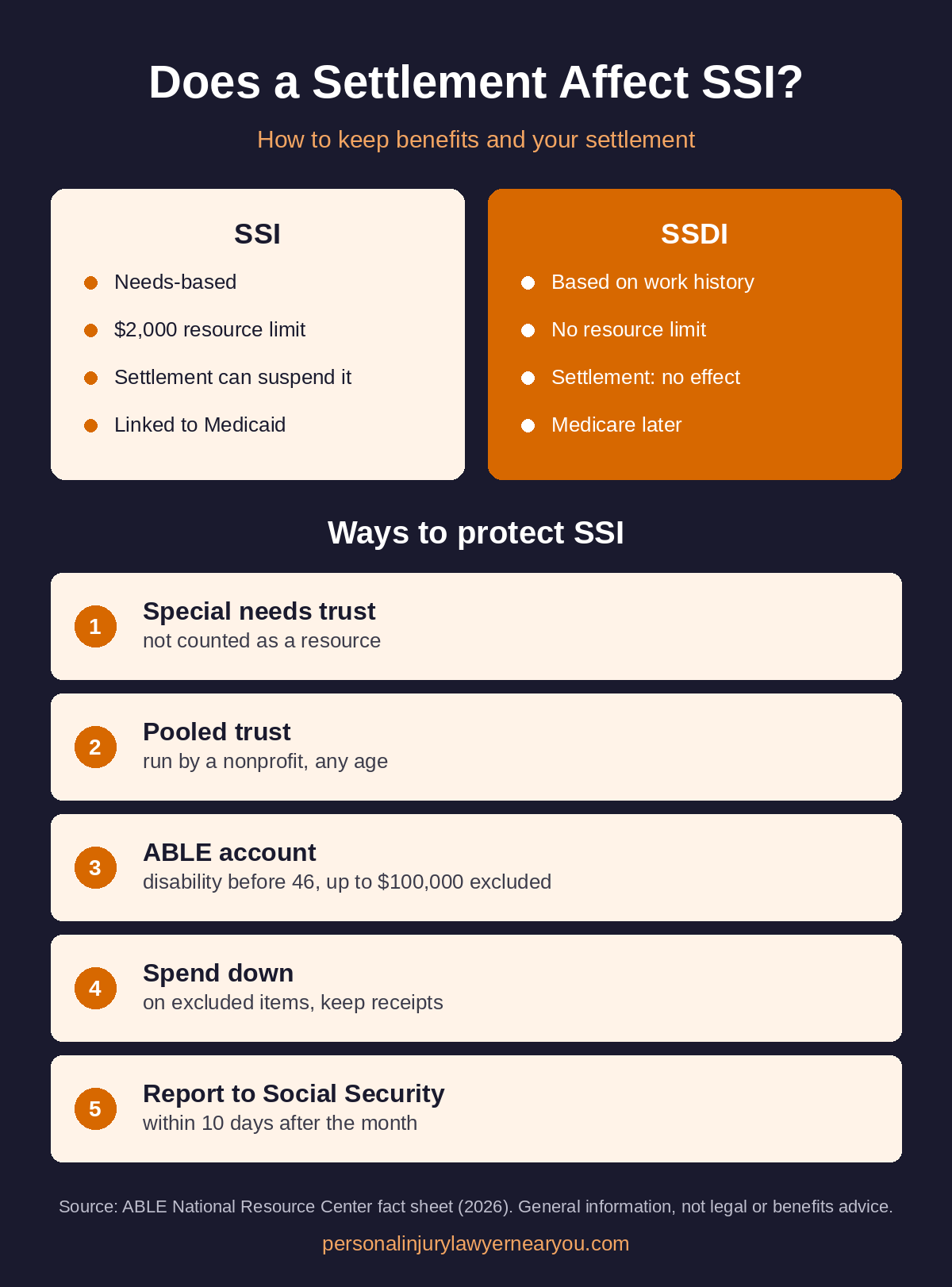
Ways to Protect SSI When You Settle
| Option | Best for | Key points |
|---|---|---|
| First-party special needs trust | Larger settlements, under 65 | Not counted as a resource; Medicaid payback at death |
| Pooled special needs trust | Any age, smaller or larger amounts | Run by a nonprofit; similar protection |
| ABLE account | Disability that began before 46 | Up to $100,000 excluded; annual contribution cap |
| Spending down | Smaller settlements | Spend on excluded items in the month received; keep receipts |
Special needs trusts
A first-party special needs trust holds the settlement for the benefit of the disabled person and is not counted as their resource. It must meet strict federal rules, is generally for people under 65, and usually has to repay Medicaid from what is left when the beneficiary dies. A pooled trust, run by a nonprofit, works in a similar way and can be an option at any age.
ABLE accounts
An ABLE account is a tax-advantaged savings account for people with disabilities. Up to $100,000 in an ABLE account is excluded from SSI resources. From 2026, eligibility covers people whose disability began before age 46, up from 26, which opens this option to many more injury victims. Annual contributions are capped, so an ABLE account suits smaller settlements or works alongside a trust.
Spending down
Some purchases do not count as resources, such as a home you live in, one vehicle, household goods, and paying off debt or medical bills. Spending a settlement on these within the month can keep you under the limit, but keep receipts and avoid giving money away, which can trigger a penalty.
Report the Settlement
SSI recipients must report changes in income and resources to Social Security, generally within 10 days after the end of the month in which they happen. Failing to report can create an overpayment you have to repay.
Plan Before You Sign
The structure of a settlement matters as much as the amount. Building a trust or ABLE contribution into the settlement terms is far easier than fixing a problem after the money is in your bank account. It is also worth knowing how other parts of the payout are treated: see whether personal injury settlements are taxable and whether creditors can take your settlement.
Your lawyer’s fee and expenses come out first, as explained in our guide to personal injury lawyer fees in New York, and the net figure is what affects benefits. For an idea of what your claim may be worth, try the personal injury settlement calculator. If you receive SSI and were hurt in Queens, a Queens personal injury lawyer can coordinate with a benefits planner before you settle.
Frequently Asked Questions
Does a personal injury settlement affect SSI?
Usually yes. SSI is needs-based, and a settlement is generally counted as income in the month you receive it and as a resource after that. If your resources go over $2,000 for an individual or $3,000 for a couple, SSI can be suspended.
Does a personal injury settlement affect SSDI?
Generally no. SSDI is based on your work history and disability, not your financial need, so a personal injury settlement does not reduce SSDI benefits.
How can I keep SSI after a settlement?
Common options are a first-party special needs trust, a pooled trust, an ABLE account, or spending the money on items SSI does not count, such as a home or one vehicle. These should be planned before the settlement is paid.
What is the ABLE account age limit in 2026?
From 2026, you can use an ABLE account if your disability began before age 46, up from 26. Up to $100,000 in an ABLE account is excluded from SSI resources.
Do I have to report a settlement to Social Security?
Yes. SSI recipients must report changes in income and resources, generally within 10 days after the end of the month in which they receive the money.
Will a settlement affect my Medicaid in New York?
It can. In New York, SSI recipients usually receive Medicaid automatically, so losing SSI can affect Medicaid, and Medicaid may have a lien for accident-related care it paid.
Key Takeaways
✅ SSI has a $2,000 individual and $3,000 couple resource limit
✅ SSDI is not means-tested and is generally not reduced by a settlement
✅ Special needs trusts, pooled trusts and ABLE accounts can protect SSI
✅ ABLE eligibility expanded in 2026 to disabilities that began before 46
✅ Plan the structure before signing, and report the settlement to SSA
On SSI and Expecting a Settlement?
The right structure can protect both your settlement and your benefits. A free case review covers the claim itself and flags where benefits planning needs to happen before you sign.
Receiving Benefits and Hurt in an Accident? Talk to Us
Free case review. No win, no fee. No upfront cost.
Want more NYC injury guides and legal news from PILNY in your Google results?
